Why we need load balancer ? can we just create one very stable server which is the failure rate zero and when we need to implement this load balancer ?
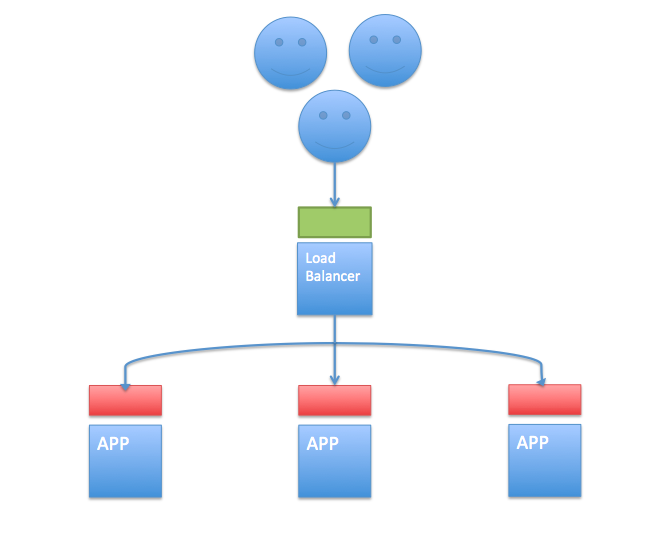
Load balancing at least has two main purposes :
- Increasing fault tolerance
- Distributing load
Increasing fault tolerance means ensuring and increasing uptime and reliability current application or system. This is very critical for such services which sale high availability of their services which is once downtime happened exceeding the tolerance limit, will cause big trouble and endanger their business continuity. Nowadays, for example when services like Facebook, or whatsapp down, users which are rely on FB and Whatsapp as their backbone business, will lose trust and if this happened frequently will abandoned FB and Whatsapp and worst case will move to competitor services.
Second purposes of load balancing is distributing load. This load distribution make scaling (Horizontal Scale) will much more easier to do instead of increasing capacity and specification in one single server. This will have much more advantages for high levels concurrency transaction. Using load balancer, we can increase or remove server easily without downtime and of course will drive to cost savings in final result.
In this post we will use and configure NGinX as load balance using 3 major techniques :
- Round-Robin
- Least Connections
- Hash Load Balancer
ROUND ROBIN
This is could be the most common and simple mechanism in load balancer which the request will be processed by the first available server in defined stack, second request will be handled by the second server in stack and so on in rotational basis. This could be seen in loop pattern, which the handling process request will back to first server when last server has processed the request.
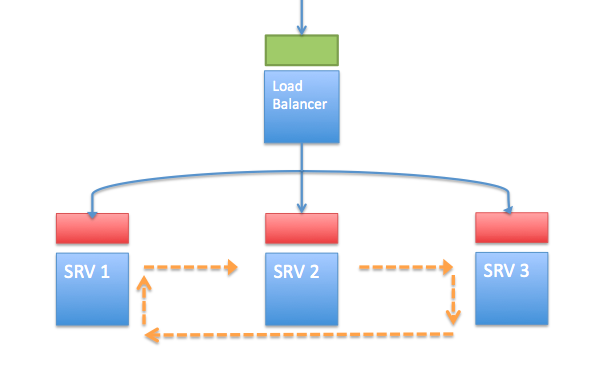
Round Robin load balancer has one advantages, that no need further configuration in server side, but also has disadvantages that will ignore current server load because no such check mechanism to ensure that current server can handle the request.
For example we have two identical rails apps which run each on port 3000 and 4000 in local server, and has each own id. Imagine this only small apps which only echo out the the app id. The nginx config will be like this :
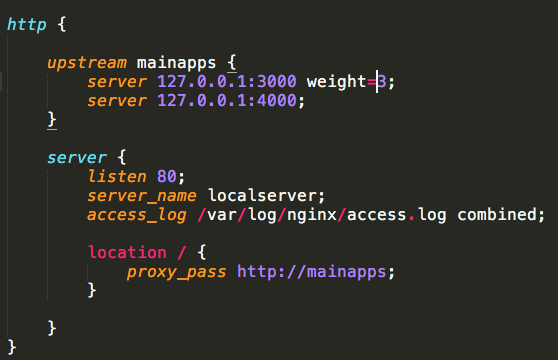
Inside upstream block directive under http directive, we define two server and name of the server. Along with first server definition (127.0.0.1:3000), we also define weight to indicate the server capacity. it means, first server will serve request 3 times higher than other server. this will be useful if we have two different server with different capacity. in server directive, we use proxy_pass directive to point all traffic to upstream directive.
NGinX will use round-robin algorithm by default because we didn’t specify any algorithm. this configuration will make all request served sequentially by upstream server. first request will handled by first server, second request by second server and so on.
LEAST CONNECTION
In Least Connection algorithm, request will distributed to server with lower active connection. This mechanism different with round-robin that does not consider any server load or response time when distributing request. Least Connection algorithm assumes connection proportional to server load.
This is sample of NGinx config using Least Connection Algorithm:
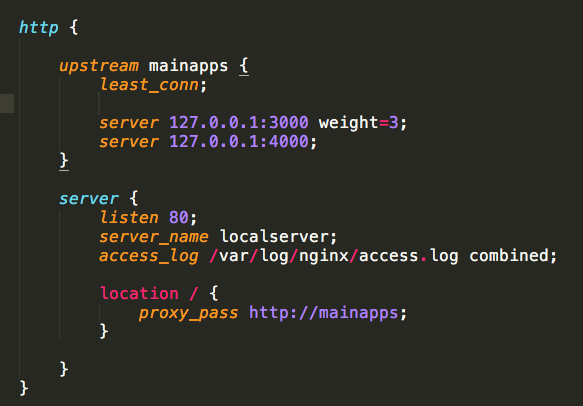
as we can see from config above, the main difference is we define algorithm least_conn in upstream directive.
this will make when request come in, NGinx will determine which server has lower active connections and will assign the request into this server.
HASH LOAD BALANCING
When a Load balancer is configured to use the hash method, it computes a hash value, commonly client’s IP address is used as pattern to match, then sends the request to the server, ensuring that connections within existing user sessions are consistently routed to the same back-end servers. This means every subsequent request from same hash will always route to same upstream server.
The config it self same as with RR and Least Connection algorithm. The difference is we define hash in upstream block, and use client remote address as the key factor to build the hash.
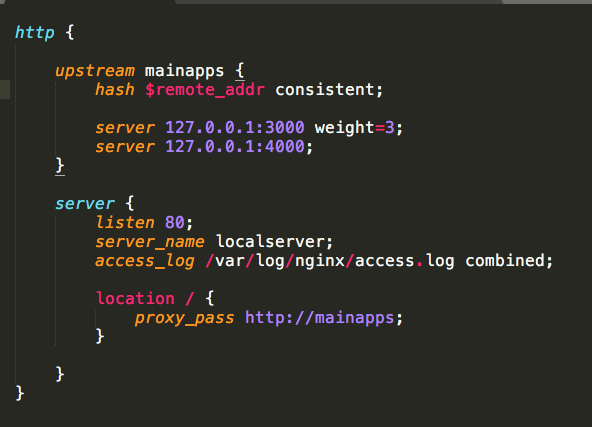
As conclusion, NGinX support these 3 Algorithm when we set NGinX as load balancer. From the simple one Round-robin algorithm to more complex hash algorithm.
For further reading can refer to NGinX documentation here.
Jakarta, May 7Th 2018
Aah Ahmad Kusumah